-
Practice ghunnah
 صِرَٰطَṣirāṭa ٱلَّذِينَalladhīna أَنۡعَمۡتَanʿamta عَلَيۡهِمۡʿalayhim
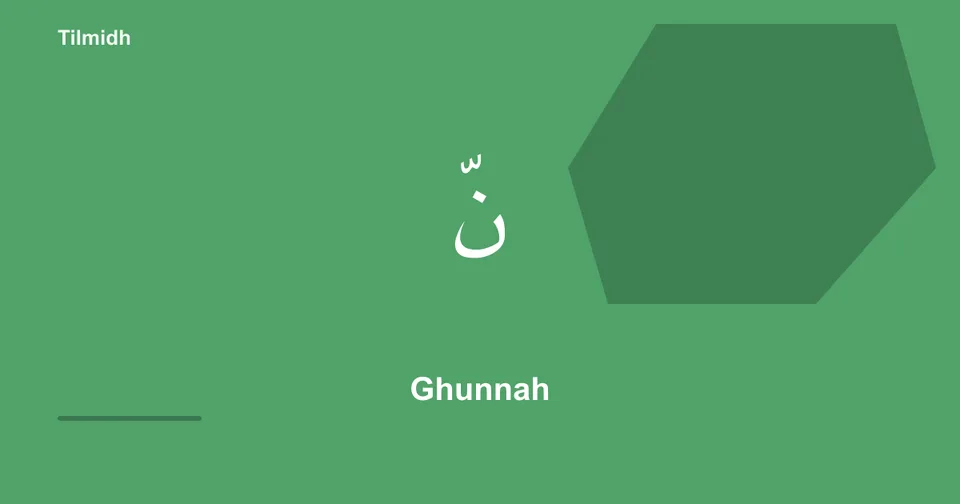
Ghunnah · two counts
Nun mushaddad — ghunnah of two counts. Ghunnah is the nasal sound that lives in ن and م when the rule calls for it — idghām with ghunnah, ikhfāʾ, iqlāb, or a shaddah on nūn/mīm. You hold the hum in the nose for about two ḥarakāt while the tongue (or lips) stays in place. Too short and the rule disappears; too long and you invent a melody.
When ghunnah appears, and how full it is
The hum is not all-or-nothing: it is complete on a shaddah, present but merged in idghām and ikhfāʾ, and absent in iẓhār. This table covers every case you will meet in the short surahs.
Case Ghunnah? نّ or مّ (shaddah) complete, two ḥarakāt nūn sakinah / tanwīn before ي ن م و idghām with ghunnah nūn sakinah / tanwīn before ل ر idghām without ghunnah nūn sakinah / tanwīn before ب iqlāb: a nasalised mīm nūn sakinah / tanwīn before the 15 letters ikhfāʾ, hidden nasal nūn sakinah / tanwīn before ء ه ع ح غ خ iẓhār, no ghunnah The example in Al-Fātiḥah
ٱلرَّحْمَٰنِ ٱلرَّحِيمِ
In Al-Fātiḥah, ar-raḥmān and ar-raḥīm carry shaddah on the rāʾ after the definite article — not ghunnah on rāʾ, but nearby you will meet nūn/mīm that do. In anʿamta (1:7) the nūn sits before ʿayn: that is iẓhār, so you do not hide with a heavy ghunnah. Tilmidh’s job is to confirm you said the right word; a teacher still judges the length of the hum.
The short rule to keep in mind
When idghām with ghunnah applies (nūn sakinah or tanwīn before ي ن م و), merge and keep the nasal. Before ل ر the merge is without ghunnah. Ikhfāʾ before the fifteen letters is a light nasal with the tongue near — not full contact like iẓhār, not full merge like idghām.
What the mic hears
On the mic, rushing kills ghunnah: the engine hears a clipped consonant and the word is not accepted. Slow down on the nasal. Colors on screen mark tajweed from Quran.com so you see where a hum is expected before you speak. Pair this with ikhfa and idgham.
Open the mic on Al-FātiḥahFrequently asked questions
How long is a ghunnah held?
About two ḥarakāt — roughly the time of two short vowels. Tilmidh does not time this: the mic checks that the word was said, while the length is trained by ear and confirmed by a muqriʾ.
On which letters is ghunnah obligatory?
On nūn and mīm carrying a shaddah (نّ and مّ), in every position and every case. This is the fullest degree, called akmal.
Are ghunnah and idgham the same thing?
No. Ghunnah is the nasal sound itself. Idghām is the merging of a nūn sakinah into the following letter — a merge that carries ghunnah before ي ن م و, but none before ل ر.